Britain's education system has long promoted learning about different religions as part of building understanding, tolerance, and cultural awareness.
School visits to churches, mosques, synagogues, temples, and other places of worship have become a common part of that mission.
However, a growing debate is emerging over whether some educational activities are crossing an important line.
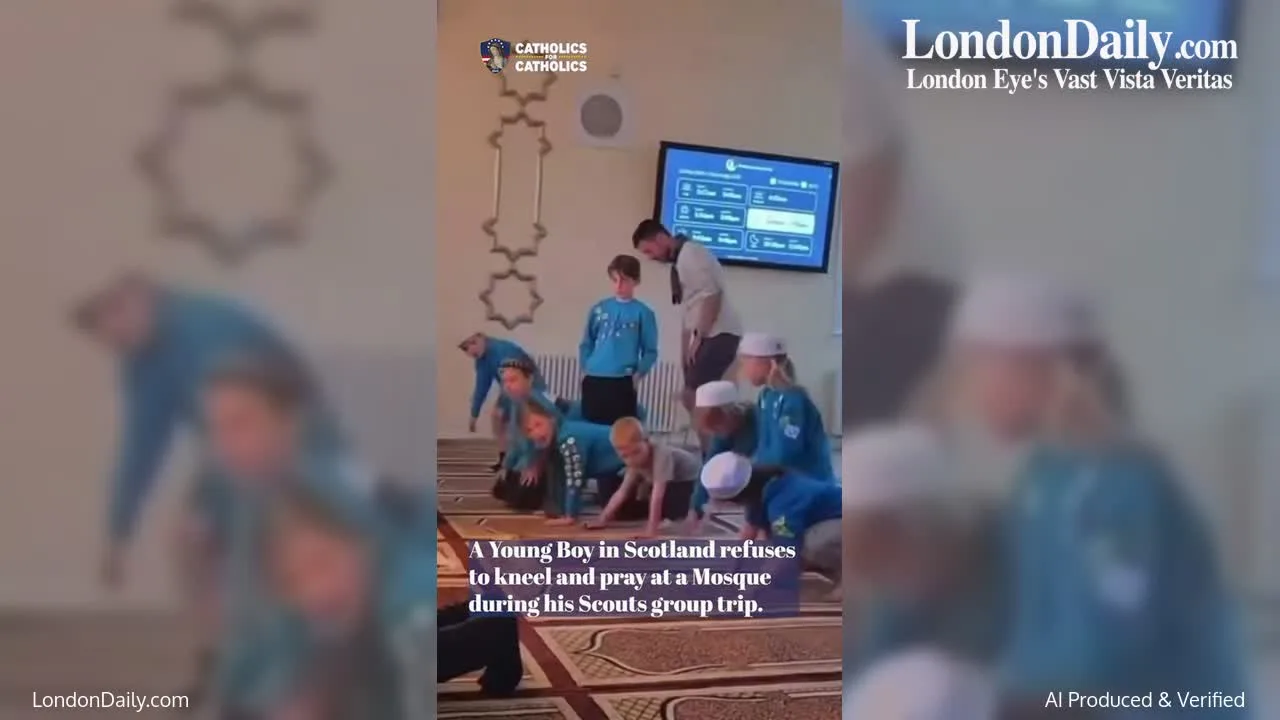
The controversy centers on reports and videos showing schoolchildren participating in activities resembling Islamic prayer during mosque visits.
Supporters argue that such activities help students understand religious traditions from an experiential perspective.
Critics counter that observing a religious practice is educational, while performing a religious practice is fundamentally different.
At the heart of the debate is the principle of freedom of conscience.
Democratic societies protect the right to practice a religion, but they also protect the right not to participate in religious rituals.
Many parents believe schools should expose children to different faiths without encouraging, expecting, or normalizing participation in acts of worship.
The issue is not specific to Islam.
The same concern would apply to any religion.
A Christian child should not be expected to participate in Islamic prayer, a Muslim child should not be expected to take part in Christian worship, and a non-religious child should not be pressured into any religious ritual.
As Britain's society becomes increasingly diverse, schools face the challenge of promoting understanding while maintaining neutrality.
For many parents and educators, the guiding principle remains simple: teach every religion, respect every religion, but compel participation in none.